Trezor.io/Start – Setup & Security Guide (Demo JSX Template)
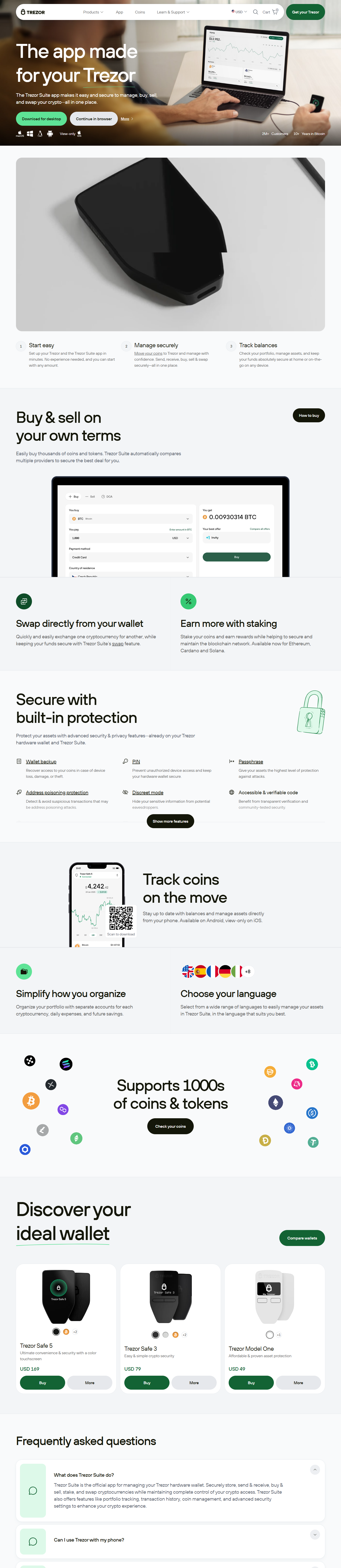
This JSX layout is an educational template inspired by the modern onboarding experience found on hardware wallet setup pages like Trezor.io/start. The goal of this design is to demonstrate how a clean, simple, instructional interface can be created using nothing but React, HTML, inline CSS, and small blocks of JavaScript logic. No external stylesheets or imported CSS files are used. Everything is contained in one clean, readable component suitable for learning UI structure.
Getting Started
When a user purchases a new hardware wallet, they typically begin the setup process through an official getting‑started page. This template demonstrates how such a page may be structured. The interface aims to guide users through the steps of connecting their device, installing required software, and learning the basics of secure operation without overwhelming them with unnecessary complexity.
1. Connect Your Device
Users typically begin by connecting their hardware wallet via USB. A modern onboarding design ensures clarity, offering simple instructions and reassuring users that their private keys remain offline and exclusively on the device. This JSX demo shows how such information can be presented with spacing, readability, and a visually guided structure.
2. Install or Open Your Desktop Suite
Most hardware wallets include a companion desktop application. This page layout demonstrates messaging that encourages users to download or open their suite, helping them navigate firmware checks, wallet creation, or account management. A clean instructional layout increases user confidence and creates a smoother onboarding flow.
3. Wallet Creation & Recovery
New users generally create a wallet for the first time, while returning users may restore an existing one using a recovery seed. The educational purpose of this demo is to emphasize that seed phrases must never be typed into any website. They belong only on the device itself. The JSX layout provides space for such important warnings, helping developers build safer user interfaces.
4. Understanding Device Security
Hardware wallets protect digital assets by storing private keys offline. A template like this one can include explanations about PIN codes, passphrases, firmware verification, and the importance of keeping backups safe. By using a structured layout, developers can provide users with essential information in a clear, approachable way.